
Stage III vapor recovery systems have become essential compliance equipment for modern gas stations worldwide, capturing volatile organic compounds during refueling to reduce emissions and recover valuable fuel vapors.
Understanding Stage III Vapor Recovery Technology
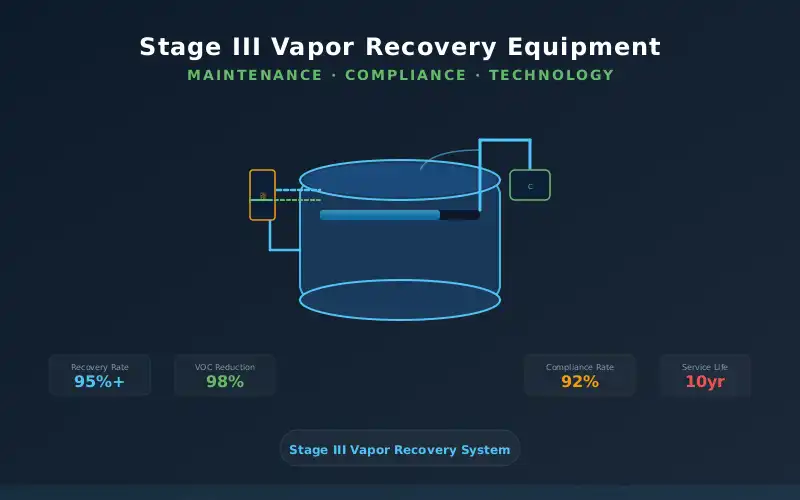
Stage III vapor recovery, also known as enhanced vapor recovery (EVR), is a critical environmental control system designed to capture fuel vapors displaced during vehicle refueling. Unlike Stage I recovery (which captures vapors during tanker truck delivery) and Stage II recovery (which captures vapors at the nozzle), Stage III systems integrate advanced monitoring, automated diagnostics, and higher-efficiency capture mechanisms to achieve VOC (volatile organic compound) recovery rates exceeding 95%.
These systems operate through a closed-loop mechanism: as liquid fuel enters a vehicle’s tank, the displaced vapor is drawn back through a coaxial hose into the dispenser, then routed through a vapor processing unit that captures hydrocarbons using carbon adsorption, membrane separation, or condensation technologies. The recovered vapors can be returned to the underground storage tank or processed into liquid fuel, significantly reducing atmospheric emissions.
Key Components of Stage III Systems
Vapor Processing Unit (VPU)
The VPU is the heart of any Stage III vapor recovery system. It typically employs activated carbon canisters that adsorb hydrocarbon vapors, followed by a vacuum regeneration cycle that desorbs the captured vapors and returns them to the storage tank as liquid. Modern VPUs feature microprocessor-controlled regeneration cycles that optimize energy consumption while maintaining peak capture efficiency.
Coaxial Hoses and Nozzles
Stage III systems require specialized coaxial hoses that deliver fuel through an inner tube while simultaneously capturing vapors through the outer annular space. These hoses must maintain strict vapor-tight integrity, with permeation rates below regulatory thresholds. The nozzles incorporate vapor passage shutoff valves and boot seals that ensure complete vapor capture during the entire refueling event.
Pressure Management Systems
Underground storage tank (UST) pressure monitoring is integral to Stage III compliance. Electronic pressure management systems continuously monitor tank pressure and automatically adjust vapor processing rates to prevent pressure buildup that could trigger alarms or cause fugitive emissions.
Diagnostics and Monitoring Equipment
Regulatory compliance requires continuous monitoring of vapor recovery system performance. Stage III systems incorporate onboard diagnostics that track vapor-to-liquid (V/L) ratios, pressure decay test results, and system integrity. These diagnostic systems generate compliance reports automatically, simplifying regulatory recordkeeping requirements.
Maintenance Best Practices
Regular Inspection Schedule
Industry best practices recommend weekly visual inspections of all vapor recovery components, monthly operational tests, and quarterly comprehensive system evaluations. Key inspection points include checking for hose cracks or kinks, verifying nozzle boot seal condition, testing vapor return line integrity, and confirming VPU cycle operation.
Carbon Canister Maintenance
Activated carbon canisters typically require replacement every 3-5 years, depending on usage volume and vapor loading rates. Signs of carbon degradation include reduced recovery efficiency, increased pressure drop across the canister, and visible carbon dust in downstream piping. Regular bed temperature monitoring can help predict canister life and prevent unexpected performance degradation.
Leak Detection and Repair
Vapor leaks are the most common cause of Stage III system non-compliance. Annual pressure decay testing is mandatory in most jurisdictions, with allowable leak rates typically limited to 0.1-0.3 gallons per hour. Ultrasonic leak detection equipment can pinpoint small leaks in vapor piping, coaxial hoses, and fittings that might be missed by conventional testing methods.
Calibration and Sensor Maintenance
Vapor flow meters, pressure transducers, and temperature sensors require annual calibration to maintain measurement accuracy. Drift in sensor readings can lead to false compliance alarms or, worse, undetected system performance degradation. Maintaining calibration records is essential for regulatory audits.
Regulatory Compliance Framework
United States Regulations
The U.S. Environmental Protection Agency (EPA) requires Stage III vapor recovery systems at all gasoline dispensing facilities with throughput exceeding 10,000 gallons per month in designated ozone nonattainment areas. The EPA’s 40 CFR Part 63 Subpart CCCCCC establishes performance standards including a minimum 95% vapor capture efficiency, annual pressure decay testing, and daily V/L ratio verification.
European Union Directives
The EU’s Stage II Petrol Vapour Recovery Directive (2009/126/EC) was updated to incorporate Stage III-equivalent requirements as of 2020. The European Committee for Standardization (CEN) has developed EN 16339:2022, specifying test methods and performance criteria for vapor recovery systems that align with the EU’s ambitious Zero Pollution Action Plan.
Chinese National Standards
China has implemented rigorous Stage III vapor recovery standards under GB 20952-2020, which mandates vapor recovery efficiency of at least 95% for all newly constructed and upgraded gas stations. Local environmental protection bureaus (EPBs) conduct unannounced compliance inspections and can impose substantial fines for non-compliance, with repeat offenders facing operational suspension.
Common Compliance Challenges and Solutions
Component Wear and Tear
Frequent use of vapor recovery systems inevitably leads to component degradation. Nozzle boots, O-rings, and check valves are particularly susceptible to wear. Solution: Implement a proactive replacement schedule based on manufacturer recommendations rather than waiting for component failure.
Condensation and Freezing Issues
In cold climates, condensation in vapor return lines can freeze, blocking vapor flow and triggering system alarms. Solution: Install heated vapor return lines or moisture separators in regions where temperatures regularly fall below freezing. Insulating above-ground vapor piping also helps prevent condensation.
Diagnostic Code Management
Modern Stage III systems generate numerous diagnostic codes, not all of which indicate actual equipment failure. However, ignoring diagnostic alerts can lead to compliance violations. Solution: Train station staff to differentiate between informational alerts and actionable fault codes, and establish clear escalation procedures for persistent diagnostic events.
Economic Benefits of Stage III Systems
Beyond regulatory compliance, Stage III vapor recovery systems offer significant economic advantages. Recovered fuel vapors represent a direct revenue source, with typical recovery volumes of 1-3 gallons per 1,000 gallons dispensed. For a station dispensing 100,000 gallons per month, this translates to approximately 100-300 gallons of recovered fuel per month, yielding annual savings of several thousand dollars depending on fuel prices.
Furthermore, reduced VOC emissions contribute to improved community relations and can help station operators qualify for environmental certification programs that enhance brand reputation. Some jurisdictions also offer tax incentives or expedited permitting for stations that exceed minimum compliance standards.
Selecting the Right Stage III System
When evaluating Stage III vapor recovery equipment, station operators should consider factors including dispensing volume, fuel blend compatibility, climate conditions, and local regulatory requirements. Key equipment suppliers such as Gilbarco Veeder-Root, Wayne Fueling Systems, and Shenzhen Wohong Petrochemical Equipment offer systems with varying capacities and feature sets.
Important selection criteria include carbon canister capacity, VPU energy consumption, diagnostic system sophistication, and the availability of local technical support. Systems with remote monitoring capabilities are increasingly preferred, as they enable real-time compliance tracking and predictive maintenance through cloud-based management platforms.
Conclusion
Stage III vapor recovery systems represent a mature but continuously evolving technology that plays a critical role in reducing gasoline station emissions worldwide. Proper maintenance, regular testing, and proactive compliance management are essential for maximizing system performance and avoiding regulatory penalties. As environmental standards continue to tighten globally, investment in high-quality Stage III vapor recovery equipment will remain a strategic priority for responsible gas station operators.