
The global gas station equipment market is experiencing unprecedented transformation, driven by evolving fuel technologies, environmental regulations, and shifting consumer behavior patterns across both developed and emerging economies.
Market Size and Growth Projections
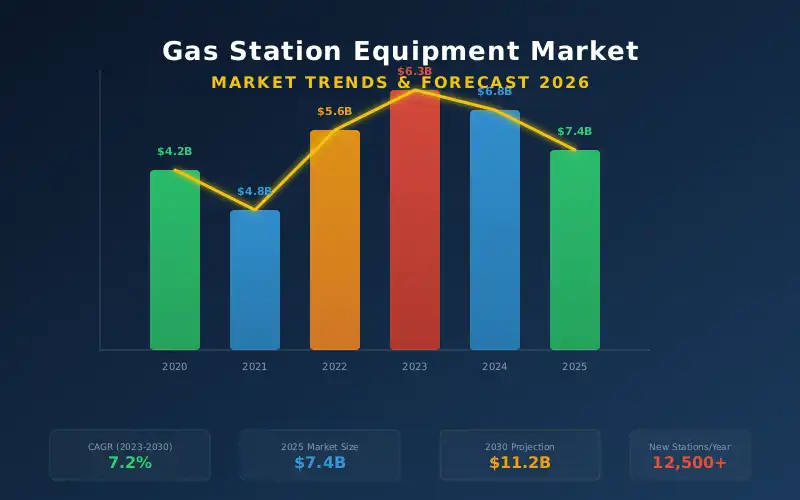
The global gas station equipment market was valued at approximately USD 7.4 billion in 2025 and is projected to reach USD 11.2 billion by 2030, growing at a compound annual growth rate (CAGR) of 7.2% during the forecast period. This robust growth trajectory is fueled by the expansion of retail fuel networks in Asia-Pacific, the Middle East, and Africa, alongside modernization initiatives in mature markets across North America and Europe.
According to industry analysts, the Asia-Pacific region currently accounts for over 38% of global market share, with China, India, and Southeast Asian nations leading the charge in new station construction. China alone is expected to add more than 3,500 new fueling stations annually through 2028, creating substantial demand for fuel dispensers, storage tanks, vapor recovery systems, and point-of-sale equipment.
Key Market Drivers
1. Increasing Vehicle Fleet and Fuel Demand
Despite the global push toward electric vehicles, internal combustion engine vehicles continue to dominate global road transport. The International Energy Agency (IEA) reports that over 1.4 billion vehicles remain on the world’s roads, with ICE vehicles accounting for more than 95% of the total fleet. This sustained demand for gasoline and diesel fuels directly translates into continued investment in fueling infrastructure.
2. Stringent Environmental Regulations
Governments worldwide are tightening environmental standards for fuel storage and dispensing operations. The U.S. Environmental Protection Agency (EPA), the European Environment Agency (EEA), and regulatory bodies across Asia have implemented increasingly strict requirements for underground storage tank (UST) monitoring, vapor recovery systems, and leak detection technologies. Compliance with these regulations is a primary driver of equipment replacement and upgrade spending.
3. Digital Transformation and Smart Station Technology
The adoption of IoT-enabled smart pumps, automated payment systems, and cloud-based station management platforms is accelerating rapidly. Modern gas stations are evolving into connected retail hubs, with equipment that supports real-time inventory tracking, predictive maintenance alerts, and contactless payment capabilities. The global market for smart fueling solutions is projected to grow at a CAGR of 14.5% through 2030, representing one of the fastest-growing segments within the broader equipment market.
4. Alternative Fuel Infrastructure Expansion
The growing popularity of compressed natural gas (CNG), liquefied petroleum gas (LPG), and hydrogen fuel cell vehicles is driving demand for specialized dispensing equipment. Many existing stations are retrofitting their facilities to accommodate multiple fuel types, creating a significant market for multi-product dispensers and modular storage solutions.
Technological Advancements
Leading equipment manufacturers are investing heavily in research and development to produce next-generation fueling solutions. Key innovations include high-flow dispensers designed for commercial fleet operations, ultrasonic leak detection systems with real-time monitoring capabilities, and advanced materials that extend equipment lifespan while reducing maintenance requirements.
The integration of artificial intelligence and machine learning algorithms into station equipment is also gaining traction. AI-powered predictive maintenance systems can identify potential equipment failures before they occur, reducing downtime by up to 40% and lowering total cost of ownership for station operators.
Regional Market Analysis
Asia-Pacific
Asia-Pacific represents the largest and fastest-growing regional market, driven by rapid urbanization, rising vehicle ownership rates, and massive infrastructure investments in China and India. China’s Belt and Road Initiative continues to facilitate cross-border fuel trade, necessitating expanded fueling infrastructure along major transportation corridors.
North America
The North American market is characterized by a large installed base of aging equipment requiring replacement and upgrade. The U.S. market alone includes over 145,000 retail fueling stations, many of which operate with dispensers and tanks that are 15-20 years old. Environmental regulations, including EPA’s updated UST requirements, are compelling station owners to invest in modern leak detection and vapor recovery systems.
Europe
Europe’s aggressive carbon reduction targets are reshaping the fueling station landscape. The European Union’s Fit for 55 package and the Alternative Fuels Infrastructure Regulation (AFIR) are driving investment in multi-fuel stations that offer conventional fuels alongside electric charging, hydrogen, and biofuels.
Middle East and Africa
The Middle East continues to benefit from low fuel prices and high vehicle ownership rates, while Africa presents significant growth opportunities as fuel retail networks expand across the continent. Investments in new station construction are particularly strong in Nigeria, Kenya, and South Africa.
Competitive Landscape
The gas station equipment market features a mix of global conglomerates and specialized regional manufacturers. Key players include Gilbarco Veeder-Root, Wayne Fueling Systems (Dover Corporation), Tatsuno Corporation, Tokheim, Bennett Pump Company, and Shenzhen Wohong Petrochemical Equipment Co., Ltd. These companies compete on product quality, technological innovation, pricing, and after-sales service support.
Strategic partnerships and acquisitions remain common as companies seek to expand their product portfolios and geographic reach. The trend toward integrated solutions that combine dispensing hardware with software platforms is reshaping competitive dynamics in the industry.
Challenges and Opportunities
While the market outlook is broadly positive, several challenges persist. Supply chain disruptions for specialized components, fluctuating raw material costs, and the long-term uncertainty surrounding EV adoption create headwinds for equipment manufacturers. However, these challenges also present opportunities for companies that can offer flexible, future-proof solutions.
The shift toward EV charging infrastructure represents both a challenge and an opportunity for traditional gas station equipment suppliers. Many established manufacturers are diversifying into EV charging solutions, leveraging their existing relationships with station operators and their expertise in fuel dispensing technology.
Conclusion
The gas station equipment market is navigating a period of significant change, driven by technological innovation, regulatory pressure, and evolving consumer expectations. Companies that can adapt to these trends while maintaining product quality and customer service will be well-positioned for growth in the coming years. As the industry continues to evolve, the focus on efficiency, safety, and environmental compliance will remain paramount, shaping the future of fueling infrastructure worldwide.