
Underground composite pipes have become the preferred choice for gas station fuel systems, steadily replacing traditional steel in installations worldwide.
The Corrosion Problem
Corrosion is the single biggest threat to underground steel piping. Soil chemistry, moisture, and stray electrical currents create an aggressive environment that can compromise steel pipes within years. Despite cathodic protection systems and specialized coatings, corrosion-related failures remain a leading cause of underground fuel leaks. Underground composite pipes eliminate this risk entirely because composite materials are inherently resistant to corrosion from fuels, water, and soil chemicals.
Built-in Secondary Containment
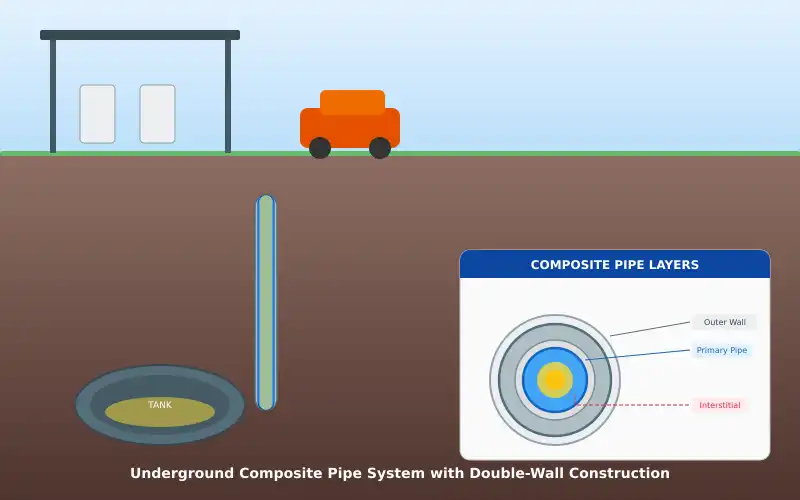
Double-wall composite pipes offer integrated secondary containment that is difficult and expensive to achieve with steel. The interstitial space between inner and outer pipe walls provides a built-in monitoring zone that can be continuously checked for leaks. This design simplifies regulatory compliance while providing superior environmental protection. With steel pipes, secondary containment typically requires external wrapping or separate containment systems.
Installation Advantages
Underground composite pipes offer significant installation benefits. They weigh considerably less than steel, reducing the need for heavy lifting equipment on site. Composite pipes can be manufactured in longer sections, requiring fewer joints that could become potential leak points. The flexibility of composite materials allows for easier routing around obstacles. Installation is generally faster, reducing labor costs and minimizing station downtime.
Lifecycle Cost Comparison
While steel pipes may have a slight edge in initial material cost, the total cost of ownership heavily favors composite pipes. Over a 30-year operating period, composite pipes typically cost 30-40% less than steel when accounting for maintenance, cathodic protection, monitoring, and eventual replacement. Steel pipes generally require replacement after 15-20 years, while composite pipes are designed to last 30 years or more.
Environmental and Regulatory Benefits
Environmental regulations continue to tighten around underground fuel storage and dispensing systems. Underground composite pipes with double-wall construction meet the most stringent regulatory requirements for secondary containment and leak detection. This built-in compliance protects station owners from fines and liability while providing peace of mind that the system is protecting the surrounding environment.
Material Compatibility
Modern composite pipe materials are compatible with all common fuel types including gasoline, diesel, ethanol blends, and biodiesel. This compatibility extends to the additives and corrosion inhibitors used in modern fuel formulations. As fuel blends continue to evolve, composite pipes offer the versatility to handle changing fuel chemistry without degradation.
Conclusion
Underground composite pipes outperform steel across nearly every metric that matters for gas station applications. From corrosion resistance and leak detection to installation ease and lifecycle costs, composites offer superior performance. For station owners planning new construction or system upgrades, composite piping represents the industry standard for quality and reliability.
WoHong Petrochemical supplies premium underground composite pipe systems for gas station applications. Contact us for product specifications and project support.