
Regular maintenance of Stage III vapor recovery equipment is essential for gas stations to maintain compliance, reduce fuel losses, and ensure smooth operations.
Why Maintenance Matters
Stage III vapor recovery systems are complex pieces of equipment that require regular attention. Studies show that poorly maintained vapor recovery systems can lose up to 30% of their efficiency within six months. This means more VOC emissions escaping into the atmosphere and more fuel product lost as vapor rather than being recovered and returned to storage tanks.
Weekly Inspection Checklist
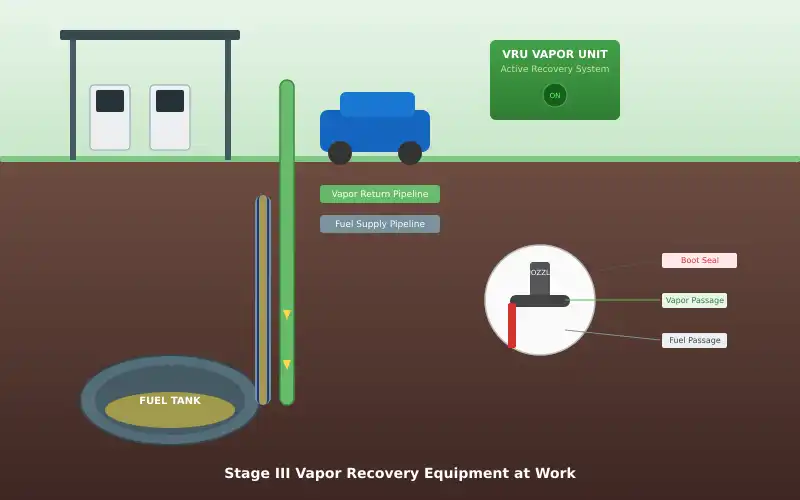
Station operators should perform these checks every week. Inspect nozzle boots for cracks, tears, or stiffness that could prevent proper sealing around vehicle fill pipes. Check vapor return hoses for kinks, abrasions, or signs of deterioration. Verify that the faceplate or splash guard is properly attached. Listen for unusual hissing sounds during refueling that may indicate vapor leaks. Confirm that monitoring system indicator lights are functioning correctly.
Monthly Testing Requirements
Monthly testing should include a more thorough evaluation. Perform a static pressure test on the vapor return system to identify any leaks. Verify that the vapor processing unit is maintaining proper pressure levels in the underground storage tank. Check all gaskets and seals for wear. Test the automatic shutoff functionality of dispensing nozzles. Review system monitoring logs for any unusual readings or warning signals.
Quarterly Professional Servicing
Every three months, a qualified technician should perform comprehensive system servicing. This includes calibrating vapor flow meters and pressure sensors, replacing worn nozzle boots and O-rings, cleaning vapor passages and vent lines, testing the complete system for compliance with local regulations, and updating system firmware if applicable.
Common Problems and Solutions
Several issues commonly affect Stage III vapor recovery performance. Blocked vapor return paths are often caused by debris or condensation buildup and can be resolved by cleaning the vapor lines. Worn nozzle boots that fail to seal properly should be replaced immediately to prevent vapor escape. Faulty pressure management valves may require recalibration or replacement. Monitoring system errors should be investigated promptly to avoid undetected system failures.
Record Keeping for Compliance
Maintaining detailed records of all maintenance activities is crucial for regulatory compliance. Station operators should document every inspection, test result, and repair performed on the vapor recovery system. These records demonstrate due diligence during regulatory audits and help identify patterns that may indicate developing problems. Most regulatory agencies require maintenance records to be kept for at least three years.
Training Your Staff
Proper staff training is a key component of effective vapor recovery maintenance. All employees who operate dispensers should be trained to recognize signs of system malfunction, understand the importance of proper refueling techniques, know how to report equipment issues, and be familiar with basic daily inspection procedures.
Conclusion
A well-maintained Stage III vapor recovery system protects the environment, reduces fuel losses, and helps gas stations maintain regulatory compliance. By following a consistent maintenance schedule and keeping thorough records, station operators can maximize the lifespan and performance of their vapor recovery equipment.
WoHong Petrochemical provides professional maintenance services for Stage III vapor recovery equipment. Contact us for servicing and support.