
Vapor recovery technology has evolved from basic Stage I to advanced Stage III systems that actively capture emissions during vehicle refueling.
Stage I Vapor Recovery: The Foundation
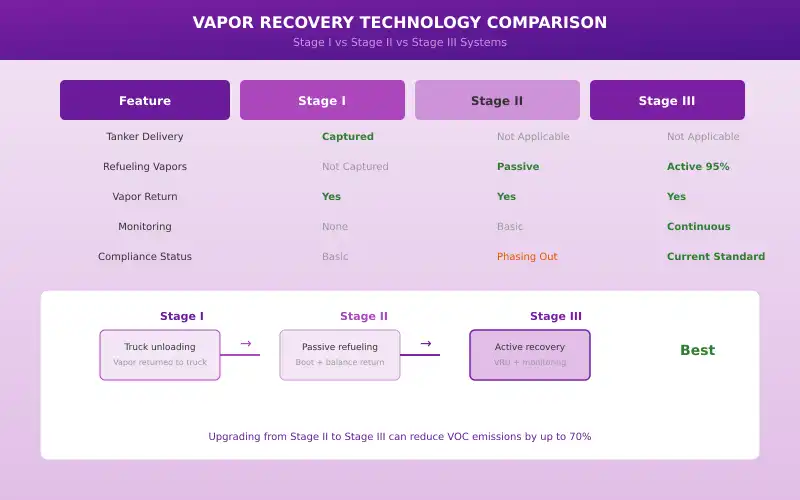
Stage I systems were the first generation of vapor recovery, designed to capture fuel vapors displaced during tanker truck deliveries. When a tanker unloads fuel into an underground storage tank, vapors inside the tank are displaced back to the truck through a dedicated vapor return line. Stage I systems are effective at capturing delivery vapors but do nothing for the vapors generated during customer refueling.
Stage II Vapor Recovery: Addressing Refueling Emissions
Stage II systems added vapor capture at the dispenser during vehicle refueling. These systems use specially designed nozzles with boot seals that create a seal around the vehicle fill pipe. As fuel flows into the vehicle, vapors are passively returned to the underground storage tank through a balanced pressure system. While Stage II represented a significant improvement, its passive nature limits capture efficiency. Many regions are now phasing out Stage II in favor of more effective Stage III systems.
Stage III Vapor Recovery: The Modern Standard
Stage III systems represent the current state of the art in vapor recovery technology. Unlike passive Stage II systems, Stage III uses active vapor recovery with a dedicated vapor processing unit that creates controlled pressure conditions in the underground storage tank. These systems can achieve capture efficiency of up to 95%, significantly outperforming earlier generations. Stage III equipment also includes continuous monitoring capabilities that provide real-time performance data and immediate alerts if efficiency drops.
Key Technology Advancements
The leap from Stage II to Stage III involved several critical innovations. Active vapor processing units maintain optimal tank pressure for maximum vapor capture. Advanced nozzle designs with improved boot seals and vapor passages ensure better seal quality and higher capture rates. Integrated monitoring systems track performance metrics and detect malfunctions automatically. Modern coaxial hoses combine fuel and vapor passages in a single, more durable assembly.
Regulatory Timeline and Compliance
The transition from Stage II to Stage III has been driven largely by environmental regulations. The European Union has mandated Stage III for all new stations and major renovations, with full compliance required by 2028. In the United States, California led the way with Stage III requirements, and other states are following. Station operators in regions where Stage II is still accepted should consider voluntary upgrades to future-proof their facilities.
Return on Investment
Upgrading from Stage II to Stage III vapor recovery offers compelling returns. Improved vapor capture reduces product loss, with typical savings of 0.1-0.3% of total fuel throughput. Reduced emissions help avoid potential fines and regulatory penalties. Modern monitoring systems reduce labor costs for compliance testing. Enhanced environmental performance improves community relations and brand reputation.
Looking Ahead
The evolution of vapor recovery technology continues. Future developments may include enhanced remote monitoring capabilities, integration with alternative fuel dispensing systems, and even higher capture efficiency targets. Station operators investing in Stage III equipment today are well-positioned for the next generation of regulatory requirements.
WoHong Petrochemical International Department supplies and services Stage III vapor recovery equipment for gas stations worldwide. Contact us for technical consultation and equipment solutions.