
Proper installation of underground composite pipes is critical for gas station performance, environmental safety, and long-term regulatory compliance.
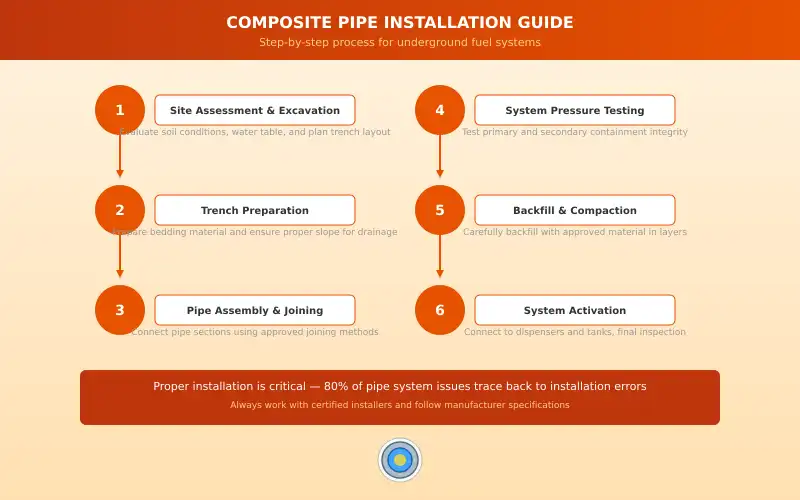
Step 1: Site Assessment and Planning
Before any excavation begins, a thorough site assessment is essential. Evaluate soil conditions including composition, pH levels, and potential corrosive characteristics. Identify the groundwater table depth as this affects installation methods and material selection. Map existing underground utilities to avoid conflicts. Develop a detailed installation plan that accounts for pipe routing, connection points, and testing requirements.
Step 2: Trench Excavation and Preparation
Excavation must follow strict guidelines to ensure pipe integrity. Trenches should be dug wide enough to allow proper bedding and backfill compaction around the pipe. The trench bottom must be stable and free of rocks or debris that could damage the pipe surface. A properly prepared bedding of sand or fine gravel should be installed to provide uniform support along the entire pipe length.
Step 3: Pipe Assembly and Joining
Composite pipe sections are joined using manufacturer-approved methods, typically adhesive bonding or mechanical fittings. Pipe ends must be clean, dry, and properly prepared before joining. Apply adhesive evenly and rotate sections to ensure complete coverage. Allow proper curing time before any movement or testing. Each joint should be inspected and marked for quality control documentation.
Step 4: Pressure Testing
Comprehensive pressure testing validates system integrity before backfilling. Test the primary pipe at 150% of maximum operating pressure to verify no leaks exist. If using double-wall pipe, also test the interstitial space to confirm secondary containment integrity. Document all test results, including pressure readings and hold times, for regulatory compliance records.
Step 5: Backfilling and Compaction
Backfilling is a critical phase that requires careful attention. Place backfill material in layers of no more than 300mm, compacting each layer to specified density. Use approved backfill material that is free of sharp objects and large debris. Install warning tape or mesh above the pipe at a specified depth. Complete surface restoration according to site requirements.
Step 6: System Integration and Activation
The final step connects the installed pipe system to storage tanks and dispensers. Verify all connections are properly made and secured. Conduct a final system-wide test before placing the system into service. Complete all documentation and provide as-built drawings to the station owner for their records.
Common Mistakes to Avoid
Several common installation errors can compromise pipe system performance. Using incorrect bedding material that shifts over time can cause pipe stress. Rushing adhesive curing time before testing can lead to joint failure. Over-compacting backfill can damage the pipe structure. Failing to document testing results can create compliance issues during regulatory inspections.
Conclusion
Proper installation is the foundation of long-term composite pipe performance. Working with experienced, certified installers and following manufacturer specifications at every step ensures a reliable underground piping system that will serve the station for decades.
WoHong Petrochemical International Department provides technical support and high-quality composite pipe systems for gas station projects. Contact us for installation guidance and product information.