
When a dispenser shows weak vapor pull, the workshop phone rings and a service van burns an afternoon. Yet a large share of these calls trace to items the site team can check in twenty minutes. A structured diagnosis does not replace the service contractor; it makes the call, when it finally happens, shorter and better aimed.
Start where the driver stands
The nozzle, boot and hose carry more abuse than any other part of the vapor path, so they go first. A cracked boot, a hose kinked by a badly parked delivery, a nozzle that does not seat fully because of a bent spout: each can strangle vapor flow at that single dispenser while every other island works fine. The fastest diagnostic clue is scope: one dispenser weak and the rest normal points local; every dispenser weak points upstream toward the piping or the unit.
Work upstream in order of cost
From the forecourt, the diagnosis moves upstream through progressively more involved territory. Vapor connections at the dispenser base, then the run to the tank, then the tank vent arrangement, and finally the vapor recovery unit itself. Each stage has a quick check that either clears it or points onward, and the discipline is to finish each check before speculating about the next.
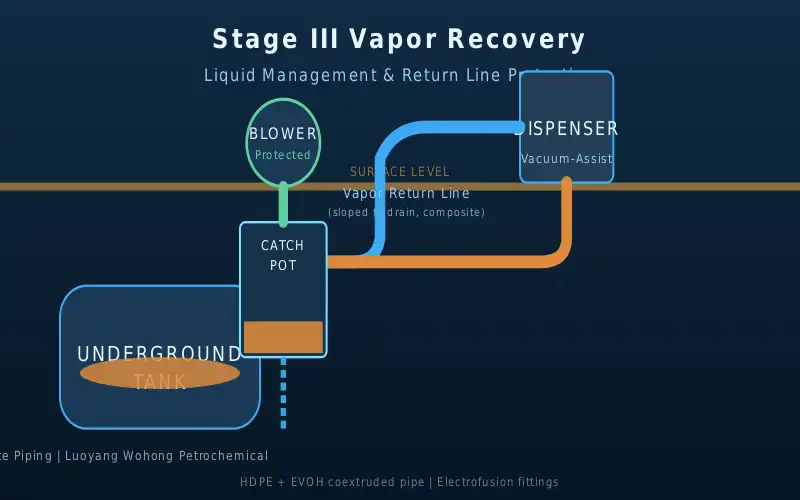
The check sequence that finds most causes
- Compare vapor behavior across all dispensers to localize the problem;
- Inspect the nozzle, boot and hose at the affected island for damage or kinks;
- Check the dispenser base connections for looseness or visible disturbance;
- Review recent site work: was anything dug, resurfaced or reconnected nearby;
- Look at the unit panel logs for alarms or run times that changed recently;
- Call the workshop with the findings if the fault survives this far.
Half of real-world cases end at step two or three, resolved by a hose, a boot or a reseated connection.
What the symptoms usually mean
| Symptom pattern | Most likely territory | Usual outcome |
|---|---|---|
| One island weak, others fine | Nozzle, hose, dispenser base | On-site fix, no workshop visit |
| Weak after a delivery only | Tank vapor space or vent path | Timing issue, clears or needs vent check |
| Slowly worsening over months | Piping low points or partial blockage | Planned piping service |
| Weak everywhere, alarms present | Vapor recovery unit | Workshop call with log data ready |
Make the service call worth its trip
When the workshop is needed, the difference between a vague complaint and a targeted report is the record built by the sequence above: which dispensers, what changed, what was checked and cleared. Contractors arrive with the right parts instead of a general toolkit, and the unit spends its downtime being repaired rather than being diagnosed. Sites that diagnose first pay less for the same service, every time.
Frequently asked questions
Can weak vapor pull damage the dispensing equipment?
Reduced vapor return makes some nozzles shut off early and stretches refueling times, which drivers feel immediately. The vapor side rarely damages the liquid side, but chronic weak pull masks other faults and costs throughput every day it persists.
Should the site open dispenser bases without the contractor?
Visual checks of accessible connections are reasonable for trained site staff; anything beyond looking and reseating belongs to the contractor. The goal is information, not heroics, and safety rules around fuel equipment are not negotiable.
How can new sites avoid weak pull problems entirely?
Most chronic cases are born at construction: undocumented low points, disturbed slope or poor connections. Insisting on tested, recorded vapor piping at build time removes the majority of the future service calls before the first car arrives.
Luoyang Wohong Petrochemical Equipment Co., Ltd. supplies double-wall composite fuel piping, fittings and electrofusion accessories for gas station and fuel depot projects. Contact us for pipeline layout review and product selection support.