
Support spacing and clamping decide whether a buried composite fuel pipe run stays straight, sealed and free of hidden stress for years. Give every run sensible support before backfilling, protect the joints from point loads, and the line holds its alignment through soil settlement and temperature swings. Get it wrong, and the first signs show up later as joint weeps, sagging low spots or fittings under strain.
Why Support Spacing Matters Underground
Flexible composite pipe does not behave like steel. It carries its loads through the surrounding backfill and through the spacing of the supports you place along the run. Where the span between supports grows too long, the pipe sags between anchor points, and that sag collects water, misaligns electrofusion fittings and concentrates bending stress at the shoulders of each joint. Because the line is buried, nobody sees the sag forming, which is exactly why spacing has to be decided before the trench closes, not after a leak appears.
Spacing also interacts with thermal movement: composite lines lengthen and shorten with ground temperature far more than rigid systems do. A run clamped too rigidly pushes that movement into the nearest fitting, while a thoughtfully supported run lets it happen along the pipe axis where the system absorbs it.
What Sets the Spacing on a Given Site
There is no single universal figure, because several site factors pull the spacing in different directions. The main ones to weigh:
- Pipe diameter and wall stiffness: larger, stiffer sections tolerate longer spans than slim dispenser legs.
- Fitting locations: every electrofusion coupling, transition and elbow deserves support on both sides so the fitting itself never carries pipe weight.
- Trench bottom quality: a prepared, even bed acts as continuous support, while a rough rocky bottom forces closer attention to local bridging.
- Riser sections and vertical legs: these need guidance and protection rather than the same logic as horizontal runs.
Treat the manufacturer spacing guidance as the starting frame, then tighten it wherever fittings, grade changes or poor trench conditions appear. Closing up the spacing slightly always costs less than reopening a trench later.
Choosing and Placing Clamps
Clamps are the contact points between the pipe and its support system, so their shape and material matter. The goal is a broad, smooth bearing surface that holds the line without cutting into it. The common options compare like this:
| Clamp type | Best use | Watch points |
|---|---|---|
| Wide-band polymer clamp | General runs and long straight sections | Keep band edges smooth; avoid over-tightening that dents the profile |
| Cushioned saddle support | Runs on prepared trench bottoms | Check the cushion survives backfill and does not shift |
| Guiding bracket at risers | Vertical legs and riser transitions | Guide, do not grip rigidly; allow axial movement |
| Fabricated steel frame with liner | Manifold areas with many lines | Isolate pipe from steel edges and protect against corrosion of the frame |
Whatever the type, the clamp must never become a hinge point. A clamp that lets the pipe pivot under load will work the joint beside it every single thermal cycle until it leaks.
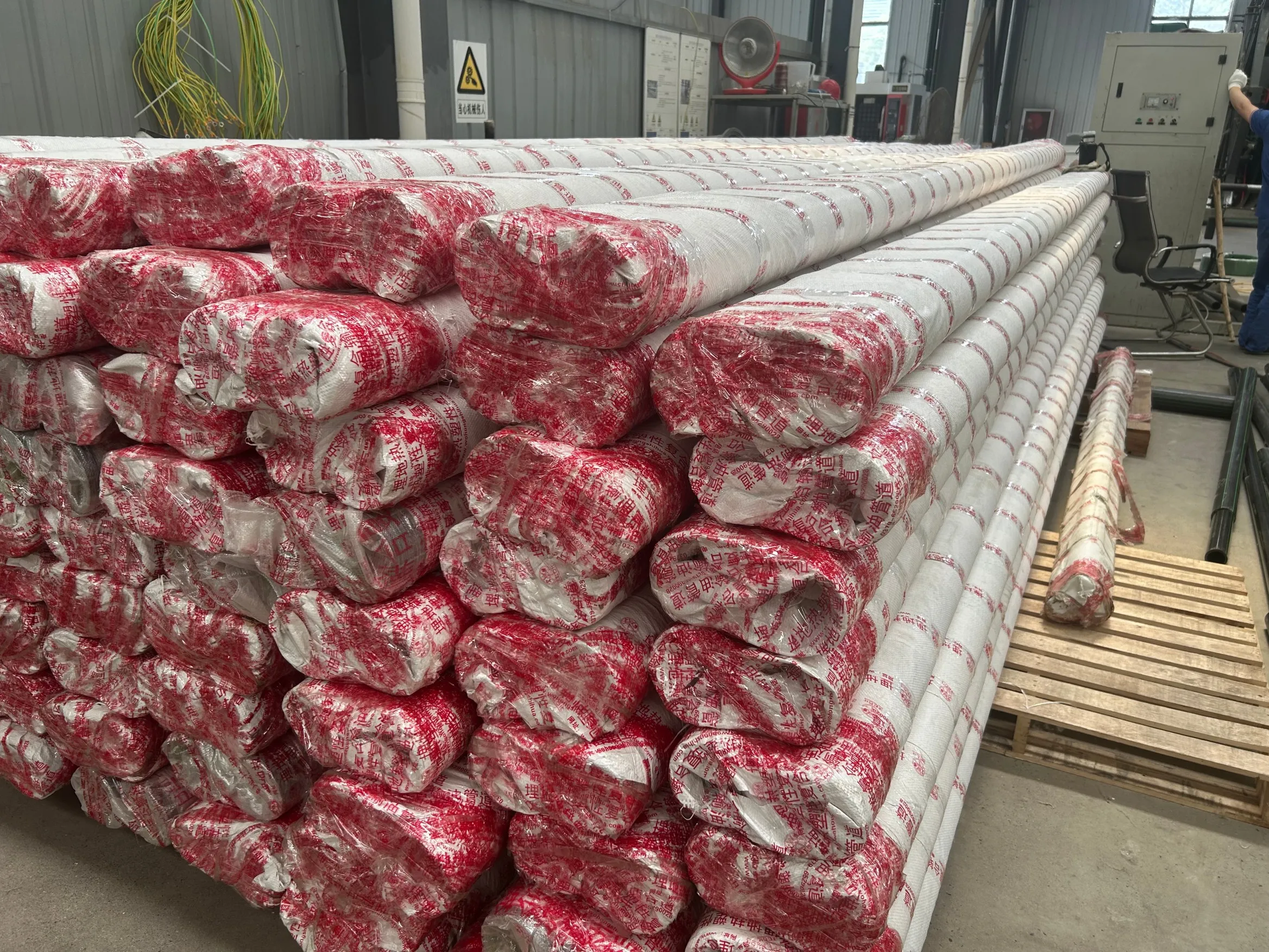
Supporting Fittings and Transitions
Fittings are where spacing discipline pays off most. An electrofusion coupling is a stiff, heavy element joined to two flexible pipe ends; if the trench bed is soft on one side, the coupling tilts and the fusion interface takes a permanent bending moment. Place firm support immediately on both sides of every fitting, keep transition fittings aligned with the line they serve, and support the inside of each grade change so the pipe cannot flatten under backfill pressure.
A Practical Spacing Routine Before Backfill
- Mark support positions along the prepared trench bottom before laying pipe, following the spacing plan and tightening it at fittings.
- Lay the run and set it into the supports, checking line and level with a straight edge over each joint.
- Fit clamps snug but not crushing, then walk the run to confirm every fitting has support on both shoulders.
- Photograph the supported run before backfill; the photos join the as-built record.
- Backfill in layers with approved material, compacting between layers and keeping large stones away from clamp points.
Mistakes That Show Up Later
The recurring failures are simple: supports skipped to save time, clamps reused with cracked cushions, fittings bridging a soft spot, and risers held rigidly instead of guided. None fail the first pressure test; they surface months later as slow weeps and sagging spots. A spacing review before backfill costs minutes and prevents this class of defect.
Frequently Asked Questions
Does support spacing differ between product and vapor lines?
The logic is the same, but vapor return lines are slimmer and more sensitive to sag, so crews commonly close up the spacing a little and watch the slope so liquid pockets cannot form.
Can a long straight run rely on the trench bed alone?
A well-prepared bed acts as continuous support, but clamps are still placed at fittings, grade changes and wherever the plan calls for them, because bed quality is never perfectly even along the run.
What should be recorded about clamping at handover?
Support positions, clamp types, photographs before backfill and any deviations from the spacing plan. This record makes future upgrades easier and shows the run was supported deliberately.
Luoyang Wohong Petrochemical Equipment Co., Ltd. supplies flexible composite fuel piping, fittings and clamping hardware for underground forecourt installations, and supports station builders with layout and installation guidance.