
Flexible composite fuel pipe is designed to curve around obstacles, but only down to its minimum bend radius. Bend it tighter than that in the trench, at the coil payout or beside a fitting, and the liner creases, the outer cover scuffs and the joint shoulders pick up stress they were never meant to carry. Respecting the bend radius is one of the simplest habits on site, and one of the cheapest insurance policies for the whole line.
What the Bend Radius Actually Protects
Inside a composite pipe wall, the load-carrying layers and the liner work together only while the pipe keeps a smooth curve. Push the curve past the allowed radius and the inner liner wrinkles first. A wrinkled liner restricts flow, traps debris and becomes the starting point of a crack. On the outside of the bend, the cover stretches and thins, losing abrasion protection exactly where the pipe presses against trench material. Neither damage is visible from a distance, which is why crews must work by rule rather than by eye.
The radius rule also protects fittings. An electrofusion coupling is rigid; the pipe leaving it must run straight for a short distance before any curve begins. Bending directly off the fitting shoulder loads the fusion interface in peel, and that is the classic recipe for a joint that passes the first test and weeps a year later.
Where Over-Bending Happens Most Often
Field experience points at four repeat offenders:
- Coil payout: a coil grabbed and pulled sideways instead of rolled off the dispenser ring.
- Trench corners: a run snatched around a square corner because a sweep was not on site.
- Fitting exits: a curve started too close to a coupling or transition fitting.
- Temporary storage: pipe dropped across an edge or kerb and left kinking under its own weight.
Sweeps Versus Field Bends
A sweep bend keeps the curvature smooth and controlled; a field bend relies on crew judgment in a muddy trench. The comparison usually settles the argument:
| Aspect | Prefabricated sweep | Field bend |
|---|---|---|
| Curve control | Fixed, smooth radius every time | Depends on crew attention and trench space |
| Joint stress | Straight sections before and after the curve | Risk of curve starting at the fitting shoulder |
| Speed | Fast to set once on site | Slower to get right, easy to get wrong |
| Best role | Planned corners and riser turns | Small adjustments within the allowed radius |
The practical answer is not that field bends are forbidden; they are simply limited to gentle curves inside the stated radius, while every tight or repeated corner deserves a sweep.
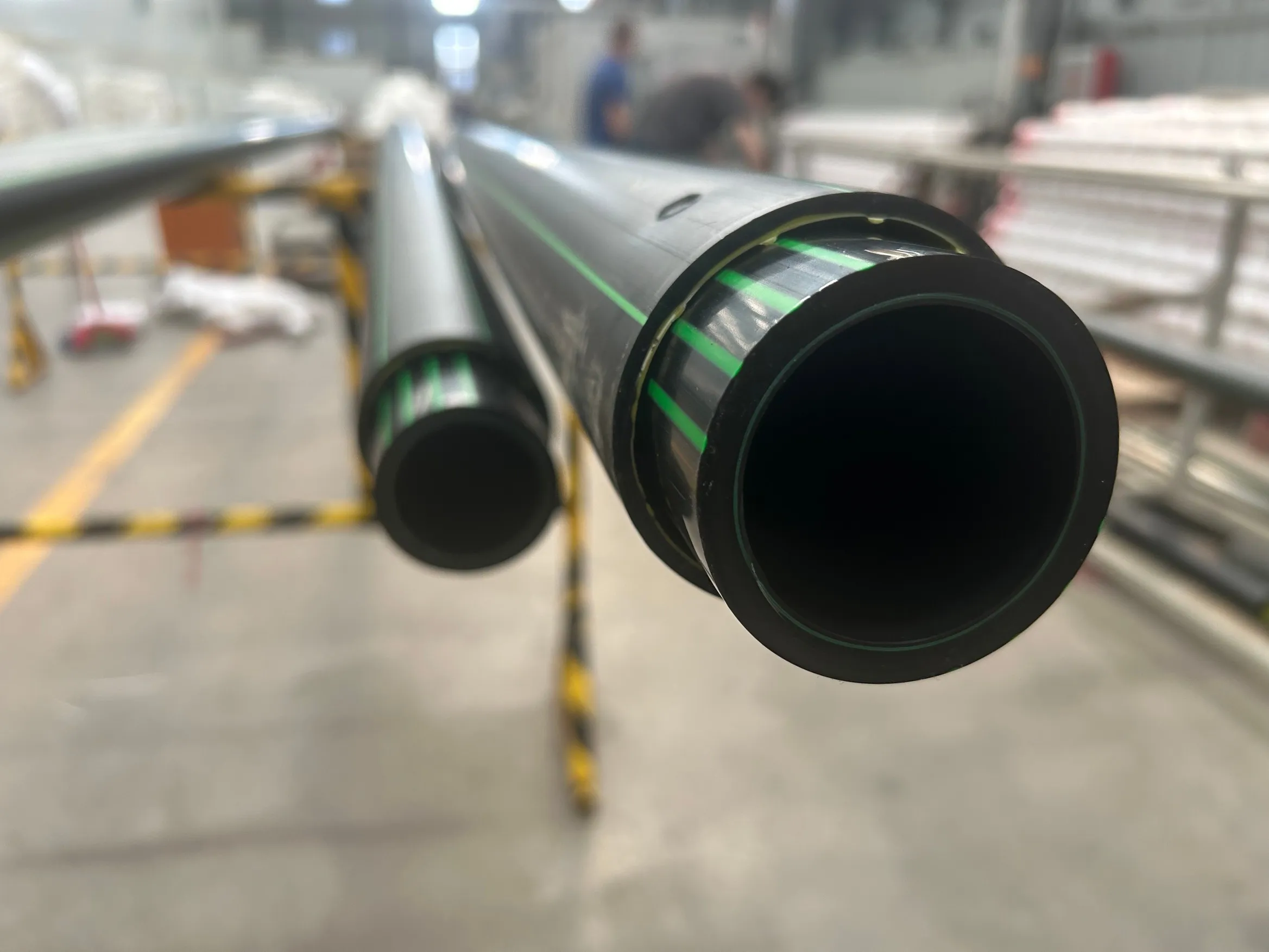
A Handling Routine That Protects the Radius
- Check the stated minimum bend radius for the pipe size before the crew starts, and mark the value on the trench plan.
- Roll coils off their ring, never drag the free end sideways across the ground.
- Route curves so they start a short straight distance away from every fitting body.
- Place a sweep wherever the required curve approaches the radius limit.
- Before backfill, walk the run and look for flat spots, scuffed covers or visible kinks, and rework anything doubtful.
If a Kink Has Already Happened
A light set in the pipe that springs back fully and shows no cover damage can usually be eased out by working the curve gently in the opposite direction and letting the material recover. A crease that stays visible, a wrinkled liner felt at the open end, or a scuffed cover means the section should be cut out and rejoined with a coupling. The fitting and a few extra centimeters of pipe cost far less than a buried defect that shows up as a slow weep in the first winter.
What Inspectors Ask About Bends
Expect questions on where curves start relative to fittings, whether sweeps were used at sharp corners, and whether any section shows a permanent set. Photographing the routed run before backfill answers all three at once and gives the as-built file a clean story. Crews who treat bend radius as a planning item, not a pipe property, finish the job with straight-forward records and no rework.
Frequently Asked Questions
Does the minimum bend radius change with pipe size?
Yes. Slimmer dispenser lines tolerate tighter curves than larger main runs, so the radius must be checked per size rather than remembered as one number for the site.
Can a bent section be straightened and reused?
A gentle curve is the normal working state and needs no correction. A visible kink or crease should be cut out; straightening a creased section hides damage that will not heal.
How close to an electrofusion fitting can a curve begin?
Leave a straight distance from the fitting body before the curve starts, so the fusion interface is not loaded in peel. The fitting instructions state the distance, and crews should treat it as a hard rule.
Luoyang Wohong Petrochemical Equipment Co., Ltd. supplies flexible composite fuel pipe, sweep fittings and electrofusion couplings for underground forecourt systems, with handling guidance for installation crews.