
Once a Stage III vapor recovery unit is installed, the surest way to confirm the whole train works is a simple vacuum draw check with an air flow observation. The unit is asked to pull the vacuum it was designed for and to move vapor at the rate the station expects, while someone watches gauges and listens. It takes under an hour, needs no special instruments beyond what the panel already shows, and it catches the mistakes that a visual inspection never will.
Why the First Performance Check Matters
Installation problems hide in places the eye does not reach. A vapor coupling left capped, a valve not fully opened, a hose kinked under the skid, or a connection at the tank not seated, all pass a walkthrough inspection. The unit may even start and run. But the moment the system is asked to perform, the shortfall appears as a vacuum that climbs too slowly, never reaches its target, or reaches it with the flow starved. Finding this on day one, with the installing crew still on site, costs minutes. Finding it during the first busy week costs deliveries.
Preparing the System for the Check
A few preparations make the reading honest rather than confusing:
- Confirm every valve in the vapor path from dispenser returns to the tank side is fully open and tagged as so.
- Check that transport caps and blanks fitted during delivery have all been removed; this is the single most common cause of a stalled vacuum.
- Let the unit complete its own start sequence before judging anything.
- Agree who watches the panel, who listens at the dispenser end, and who records numbers.
The Check Itself
With the system ready, run the unit and observe three things together: how fast vacuum builds, the level it settles at, and whether air movement is audible and steady at the vapor return points. The comparison below is what the crew is really looking at:
| Observation | What it should look like | What it suggests when wrong |
|---|---|---|
| Vacuum build-up | Rises steadily after start without long stalls | A stall points at a blank still fitted or a valve not open |
| Settled vacuum level | Holds at the unit’s stated working band | Falls short when a leak or restriction sits in the path |
| Air movement sound | Even, steady flow at return points | Weak or uneven sound suggests a kinked hose or partial blockage |
| Behavior over minutes | Stable once settled, no cycling surprises | Drifting or cycling points to sensor or line issues to chase |
Numbers vary by unit and site, so the reference is the documentation that shipped with the skid, not a memory of another station.
Reading the Results in Order
- Run the unit and record how vacuum builds over the first minutes; note any long stall.
- Confirm the settled level sits inside the stated working band and stays there.
- Have a second person confirm audible, steady movement at the far end of the vapor path.
- Repeat the cycle once more; a system that performs twice in a row is ready for handover.
- Photograph the panel readings and attach them to the commissioning record.
When the Numbers Fall Short
Work from the obvious outward. Remove remaining blanks, re-walk every valve, look for hoses pinched where the skid was set down, and recheck the tank-side connection. If vacuum still falls short with the path verified, the restriction or leak is inside the equipment scope, and the supplier should attend while the installing crew is still available. Do not accept “it will improve with use” as an explanation; a true vapor path restriction does not fix itself.
Recording for Handover
The check is only half done until it is written down. Panel readings, the time taken to settle, the repeat run and the photographs all belong in the handover pack. Months later, when someone asks whether the unit ever performed better, that record is the baseline every future service visit is measured against.
Frequently Asked Questions
How long should the whole check take?
Under an hour for most sites, including the repeat run. If it stretches much longer, something in the path is restricting the unit and the search should start then and there.
Do we need special instruments for this?
No. The panel’s own vacuum indication plus observation at the return points covers the essentials. Deeper diagnostics belong to scheduled service, not to installation day.
Should the check be repeated after the first month?
A short repeat is good practice, because soil settlement and thermal movement can expose a joint that was tight on day one. Ten minutes with the same recording sheet keeps the baseline honest.
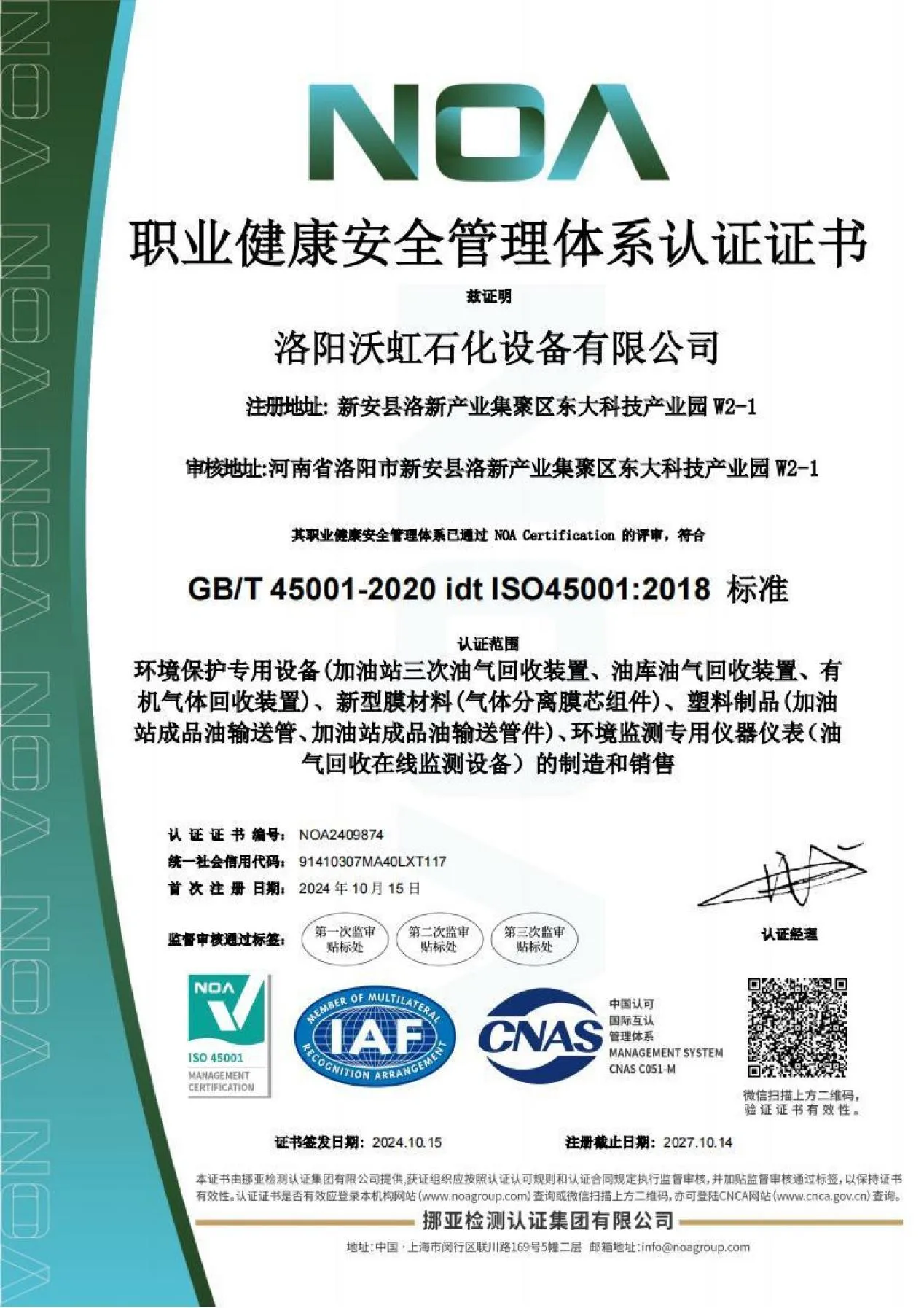
Luoyang Wohong Petrochemical Equipment Co., Ltd. supplies Stage III vapor recovery equipment and supports installers with commissioning checks and handover documentation for station vapor systems.