
Most conversations about Stage III vapor recovery end at the skid. Blower, controls, condensate handling, all settled. Then the discharge stack gets whatever height and spot is left over, and the unit spends its life fighting a placement decision nobody really made. Treated properly, the stack is part of the design, not an afterthought.
The stack is where the unit hands processed vapor back to the air. Its job is simple, but where and how it stands decides how the whole system behaves on windy days, busy days and inspection days.
Why the Stack Deserves a Design Decision
Discharge is the boundary between the recovery system and the site around it. A stack tucked behind equipment, under a canopy edge or beside a wall does not vent the same air as one in open space. Recirculation, downwash and trapped plumes are placement problems, and they show up later as odd readings, smells near the forecourt and questions from inspectors that are hard to answer.
A stack placed with intent avoids most of that. The decision costs an hour at the drawing stage and saves years of explaining.
Placement Thinking Before the Drawing
Good placement starts with the surroundings, not the stack. Walls and canopies change how air moves near the outlet, so the stack should stand where its plume can leave the site freely rather than curl into dead air. Nearby doors, windows and walkways deserve a look too, because the outlet nobody smells is the outlet nobody complains about.
Access matters as much as airflow. The stack and its support will be inspected for the life of the site, so the placement that cannot be reached safely is the placement that stops being checked.
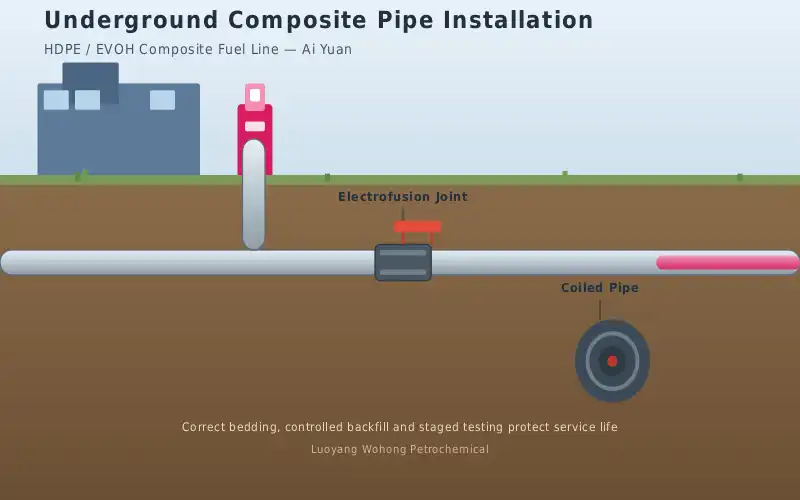
Support, Routing and the Path to the Stack
The stack is only as good as the line that feeds it. Long runs with tight bends ask the blower to push through resistance the design never needed, and low points collect condensate nobody planned to drain. Routing the discharge line with gentle changes of direction and a sensible fall keeps the last meter of the system as easy as the first.
Support belongs on paper too. A stack that flexes in the wind works its joints, and worked joints on a vapor path are future leaks. Bracing, base detail and the fixings to the skid all belong in the same drawing as the unit itself.
A Placement Review That Catches Trouble Early
Before the stack detail is locked, a short review walks the same questions an inspector would ask later:
- Stand at the proposed outlet and look up and around for canopies, walls and rooflines that could trap the plume.
- Walk the discharge line route and count the direction changes and low points.
- Check that the stack base, bracing and fixings are detailed, not improvised on site.
- Confirm safe access for future inspection, including what a technician stands on.
- Photograph the as-built stack and record its position on the site drawing.
Common Locations Compared
Sites usually choose among a few familiar spots. The table below sums up how they trade off:
| Location | Strength | Watch For |
|---|---|---|
| Open ground beside the skid | Short line, easy access, free plume | Confirm clear of future extensions and deliveries |
| Along the back wall | Out of the way of daily trade | Downwash along the wall and recirculation into dead corners |
| Under or near the canopy | Uses existing structure feel | Trapped plume under the roof and harder safe access |
Open ground wins more often than not, and the reasons are all in the second and third columns.
After Installation: Keeping the Stack Honest
A stack placed well needs little, but it deserves a place on the inspection round. The check is short: the outlet is clear, the support is sound, the joints along the discharge line look as they did on day one, and condensate points drain as designed. Five minutes a quarter is all the placement ever asks back.
When the stack appears on the site drawing with a date and a photo, every future contractor inherits the same picture. That is what placement discipline buys: a system whose last meter is as documented as its first.
Does stack height follow a fixed rule?
Height follows the site and its local requirements, not one universal number. What matters for performance is that the outlet stands clear of the structures around it, and that the whole arrangement is documented and agreed before fabrication.
Can the discharge line share routing with other vapor lines?
Sometimes, but sharing needs design attention. The discharge path serves only the unit, and mixing it with other duties creates interactions that are hard to trace later. Separate routing keeps every line’s job readable.
How often should the stack be inspected?
A quarterly walk fits most sites, with an extra look after severe weather. The check is visual and fast, and it catches the small movements and blockages that grow into complaints.
Luoyang Wohong Petrochemical Equipment Co., Ltd. supplies Stage III vapor recovery equipment and supports the piping and placement decisions that make it work as one system.