
Every buried fuel line has two lives: the busy installation week when everyone knows exactly where it runs, and the decades after, when knowledge lives only in files and fading memories. The crews that inherit the site five years later did not dig the trench, did not pull the line and will not guess its route correctly. Mapping and marking done at install time is what stands between a safe future excavation and an expensive strike.
Why routes get lost so quickly
Forecourts change constantly: new dispensers, added canopies, regraded aprons, resurfacing that swallows painted marks. Site staff turn over, contractors change, and the drawing pinned in the back office quietly stops matching reality after the first modification. Within a few years the only reliable memory of where buried fuel lines run is whatever was written down and kept current at handover.
What a useful record contains
| Record item | What it captures | Why the next crew needs it |
|---|---|---|
| Route survey tied to fixed points | Line position measured from columns, walls and corners | Marks drift with resurfacing; fixed points survive |
| Depth profile along the run | Cover depth at intervals, including road crossings | Sets safe excavation method before a bucket goes in |
| Joint and fitting locations | Where every electrofusion joint and transition sits | Repairs target the right spot without exploratory digging |
| Warning tape and tracer details | What was laid above the line and where | Tells the dig crew which signal means stop |
| Change log | Every relocation or tie-in since commissioning | Prevents trusting a drawing that time has outdated |
A marking routine that survives the surface
Paint fades and stickers peel, so durable marking leans on layers rather than any single method:
- Record the route against fixed structure points during installation, with depths noted at each break of grade;
- Lay warning mesh or tape above the run where the design allows it;
- Fix permanent route markers at property corners, crossings and direction changes;
- Hand over the route survey and depth profile with the commissioning file;
- Update the record the same week any modification touches the ground.
When the record is missing
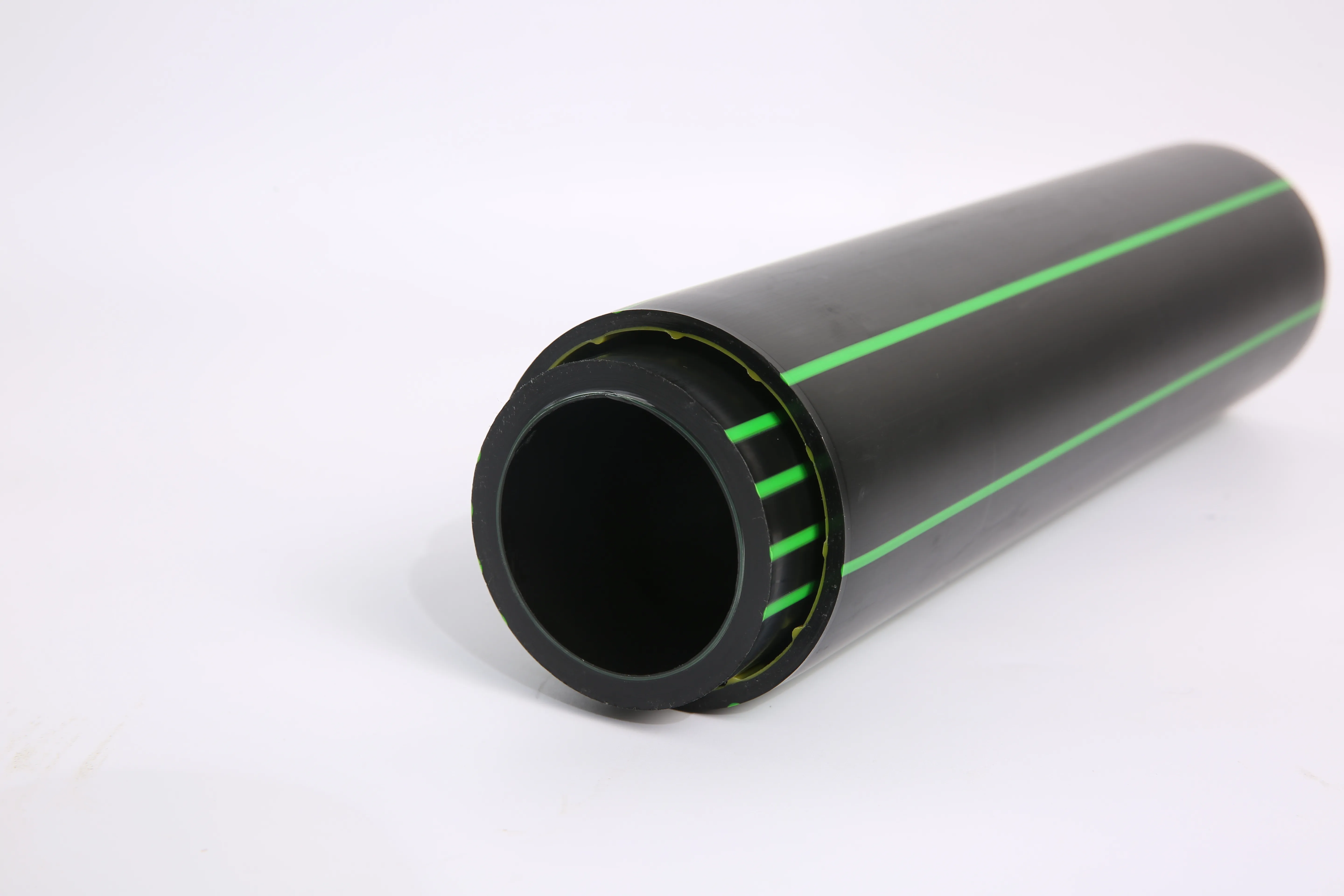
Sites inherited without documents are common, and the honest approach is to rebuild the map before it is needed. Vacuum excavation at soft spots, a line locator sweep where the system allows it, and interviews with long-serving staff together rebuild most of the picture. Composite runs help here because their joints are discrete and findable, but guessing remains the costliest tool on any forecourt.
Mapping as part of daily operations
The best stations treat the route map as a living document, not a handover artifact. Every contractor briefing starts with it, every excavation permit references it, and every modification ends with the drawing updated before the crew leaves. The habit costs minutes per project and quietly prevents the strike that would cost the station weeks.
Frequently asked questions
How accurate does the record need to be?
Accurate enough for the next crew to open the ground by hand at any point with confidence. Centimeter-level survey data is wasted effort, but a route that claims a line runs along the center of the aisle when it actually curves around a column is worse than no record at all, because it teaches people to distrust the document.
Can electronic locators find composite fuel lines?
They find what was installed to be findable. A tracer wire or detectable mesh laid above the run makes location straightforward years later; a bare composite line with no accessory is far harder to trace. That is why the decision about detection aids belongs in the specification, not in an afterthought at handover.
Who should own the route record?
One named role at the station or network office, with copies wherever contractors will look first. Records owned by everyone are updated by no one, and the single-owner habit is what keeps the drawing matching the ground after the fifth modification.
Luoyang Wohong Petrochemical Equipment Co., Ltd. supplies double-wall composite fuel piping, fittings and electrofusion accessories for gas station and fuel depot projects. Contact us for pipeline layout review and product selection support.