
Between delivery day and installation day lies a period nobody budgets for: the time the material spends on site. Storage is unglamorous, and it is also where a surprising share of later problems are created. Composite fuel pipe and its fittings tolerate a great deal in service, but poor storage quietly spends that tolerance before the pipe ever enters the ground.
What the material tolerates, and what it does not
The pipe itself shrugs off rain and most temperature swings; its enemies are mechanical and cumulative. UV exposure slowly dulls the outer layer over long storage, deep gouges from dragging become stress points, and unsupported stacking deforms coils left flat under weight. Fittings are more particular: electrofusion boxes want dry shelter, and their machined surfaces remember every knock. The storage plan is therefore less about a special environment and more about ordinary care applied consistently.
Stacking, shading and the simple rules
Pipe coils sit best on their curved side on flat ground, on timber bearers, never stacked so high that the bottom layers deform. Straight lengths rest on even supports along their span. A shade cloth or the site’s own covered store keeps direct sun off long-stayed stock, and it does double duty by keeping the fittings boxes out of the rain. None of this is costly; all of it is forgotten exactly when the project schedule slips and material sits for weeks longer than planned.
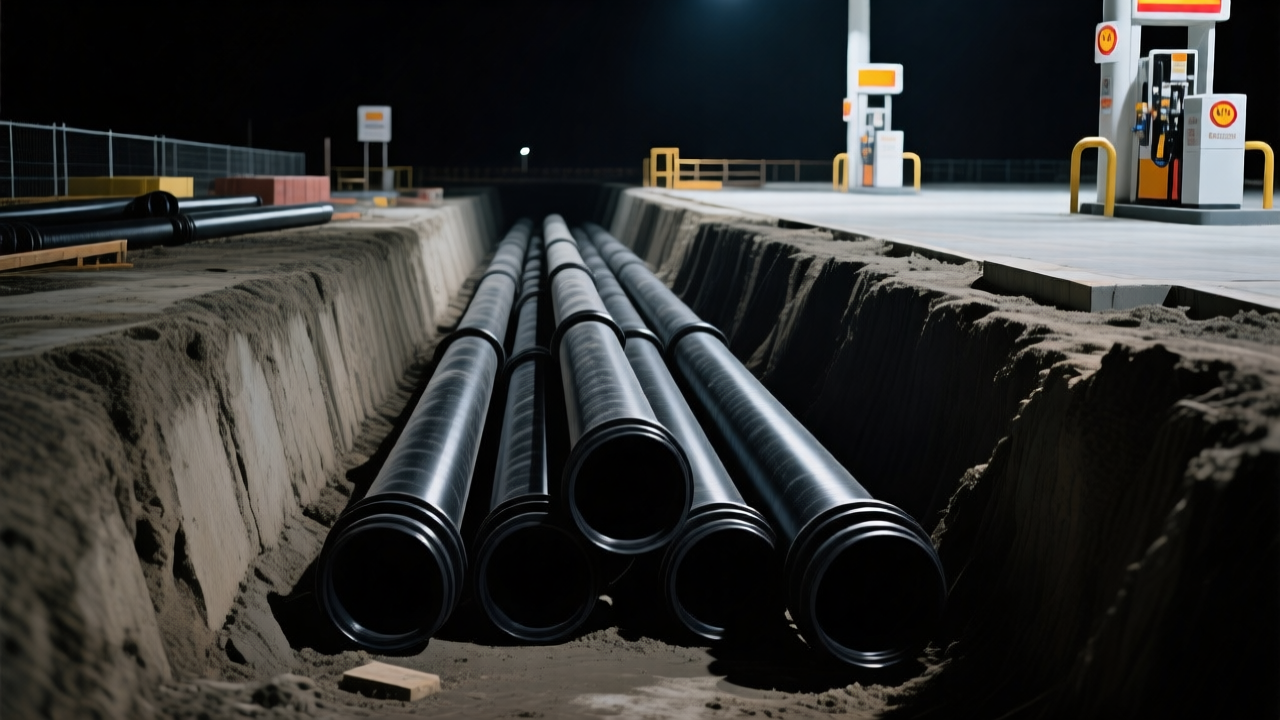
Time is the hidden variable. Material scheduled for a fortnight on site and staying three months needs the storage plan more than the schedule admits. When delay looms, a short walk-through to re-stack, re-cover and re-check beats a delivery claim later, because most storage damage is invisible on install day and visible on test day.
Handling between store and trench
The last meters of handling cause more damage than the first thousand kilometers of transport. Dragging a coil across gravel, sliding a length off a truck bed onto stones, or lifting fittings by their leads each spend the material’s margin. Simple habits prevent it: two-person carries for coils, rope slings rather than hooks, and a rule that fittings leave their boxes only at the joint.
A site storage routine
- Choose level, drained ground away from vehicle routes before the delivery arrives;
- Set timber bearers and plan the stacking so first-in is first-out;
- Cover long-stayed stock from sun; keep fittings boxes dry and closed;
- Inspect each length on unloading and again before it enters the trench;
- Keep ends capped or taped until the moment of preparation;
- Re-check the store after every schedule slip, and note condition in the log.
Storage practices and their consequences
| Practice | What it saves | What ignoring it costs |
|---|---|---|
| Timber bearers under coils | Shape and coating integrity | Deformed coils that fight the clamps |
| Shade over long stock | Outer surface condition | Brittle-looking surface, fussy fusions |
| Fittings in dry shelter | Machined surfaces and terminals | Scraped connections and re-orders |
| End caps until use | Clean fusion surfaces | Grit in the joint, scraped twice |
| Inspection before burial | Peace of mind | Damage discovered on test day |
Why storage shows up in the joints
The fusion quality checklist assumes clean, round, undamaged surfaces, and storage is where those assumptions are either kept or spent. Crews who maintain a decent store find their fusions behave like the training bench: consistent geometry, consistent scraping, consistent results. Crews who store badly discover the same truth from the other side, at the pressure test, where the material finally reports how it was kept.
Frequently asked questions
How long can composite pipe sit on site without harm?
Months, with basic care: off the ground, out of the worst sun, ends protected. The material itself is patient; the risks come from stacking pressure, impacts and fittings boxes left in the rain, all of which are storage decisions rather than material limits.
Do fittings really need indoor storage?
Dry shelter is the requirement, not a full warehouse. A locked container or covered enclosure keeps rain and grit off the boxes and away from terminals. Fittings stored loose in wet conditions are the classic source of intermittent, hard-to-diagnose joint failures.
Who is responsible for storage on a mixed contractor site?
Whoever holds the material, which should be written into the contract rather than assumed. The cleanest arrangements give storage to the installing crew, so the party whose work depends on the material’s condition is also the party keeping it.
Luoyang Wohong Petrochemical Equipment Co., Ltd. supplies double-wall composite fuel piping, fittings and electrofusion accessories for gas station and fuel depot projects. Contact us for pipeline layout review and product selection support.